Home
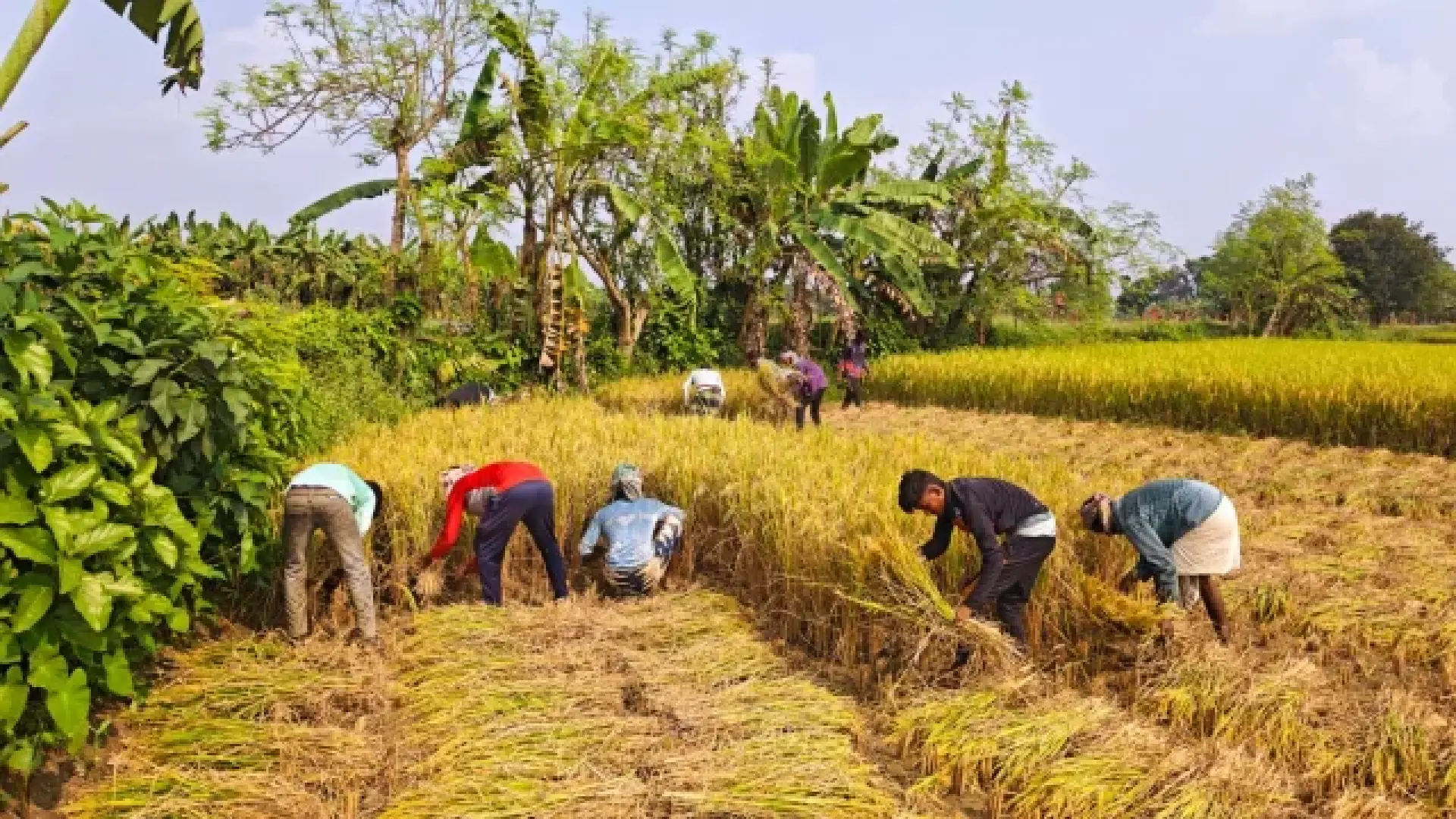
Farmers in Rajshahi are celebrating a bumper Aman paddy harvest this season, with yields reaching 17 to 20 maunds per bigha in some areas. However, rising production costs and low market prices are limiting their profits.
Paddy is currently selling for around Tk 1,200 per maund. Farmers say they need a price of at least Tk 1,400 to Tk 1,500 per maund to cover expenses and earn a fair return.
Early varieties of transplanted Aman paddy began to be harvested in different parts of Rajshahi in early November. The full harvesting season is expected to begin in another one to two weeks, according to the agriculture department.
A recent visit to Teghor, Bagsara and Paikpara fields in Paba upazila found farmers busy harvesting, threshing and bringing paddy home. Many are also preparing to cultivate potatoes, winter vegetables and pulses on the same land after harvesting Aman.
Mamun Rashid, a farmer from Teghor village, cultivated BRRI-103 Aman on three bighas and harvested 20 maunds per bigha.
He said cultivation, land preparation, transplanting and fertiliser costs amounted to Tk 7,000 per bigha. Harvesting, threshing, transportation and labour cost another Tk 7,000, taking the total production cost on his own land to Tk 14,000. Cultivation on leased or sharecropped land would add another Tk 5,000.
Mamun sold 20 maunds of paddy at Tk 1,200 per maund at Nowhata market, earning Tk 24,000. After deducting production costs, Tk 10,000 remained from the paddy sale. He also earned Tk 5,250 by selling around 21 bundles of straw at Tk 250 each. Including the straw, his surplus from paddy and straw sales stood at around Tk 15,250 per bigha.
Farmer Munjur Rahman of Bagsara field cultivated BINA-17 Aman on 10 bighas. His production cost was Tk 17,000 per bigha, with an average yield of 18 maunds. He said he had sold 20 maunds at Tk 1,200 per maund and kept the remaining paddy in the hope of getting a better price. After accounting for straw sales and other expenses, he estimated his profit at around Tk 10,000 per bigha.
Meanwhile, sharecropper Shahidul Islam of Paikpara cultivated BRRI-51 paddy on three leased bighas. He said fertiliser, pesticides, diesel and labour costs had increased compared with last year, while paddy prices had not risen accordingly. He believes farmers need at least Tk 1,500 per maund to make a reasonable profit.
Another farmer, Yusuf Ali, cultivated BRRI-10 Aman on five bighas of leased land. He has harvested paddy from two bighas, obtaining 18 maunds per bigha. He said sharecroppers would not benefit properly without fair prices for their produce.
According to the Rajshahi Department of Agricultural Extension, the cultivation target for transplanted Aman this season was 83,600 hectares. Farmers cultivated 83,670 hectares, exceeding the target by 70 hectares.
The district's total paddy production target is 314,336 metric tonnes. So far, harvesting has been completed on 12,423 hectares. The average yield target is 17 to 20 maunds per bigha.
Godagari has the largest area under Aman cultivation, covering 23,762 hectares, followed by Tanore with 22,071 hectares and Paba with 9,140 hectares. Other areas include Durgapur, Charghat, Mohanpur, Bagmara and Bagha.
Bagha Upazila Agriculture Officer MA Mannan said Aman had been cultivated on 2,352 hectares in the upazila this year, with an average yield of 20 maunds per bigha.
Rajshahi Deputy Director of Agricultural Extension Mostafa Kamal Hossain said favourable weather and limited pest and disease outbreaks had contributed to the good harvest. He expects full-scale harvesting to begin within the next one to two weeks.
He added that farmers were preparing to cultivate potatoes, mustard, maize, wheat and winter vegetables on the same land after harvesting early Aman. This would create opportunities for multiple crops on the same land.
He also said the government had decided to procure paddy at fair prices to ensure reasonable returns for farmers. The agriculture department would monitor market conditions to help ensure farmers receive fair prices in open markets as well.