Home
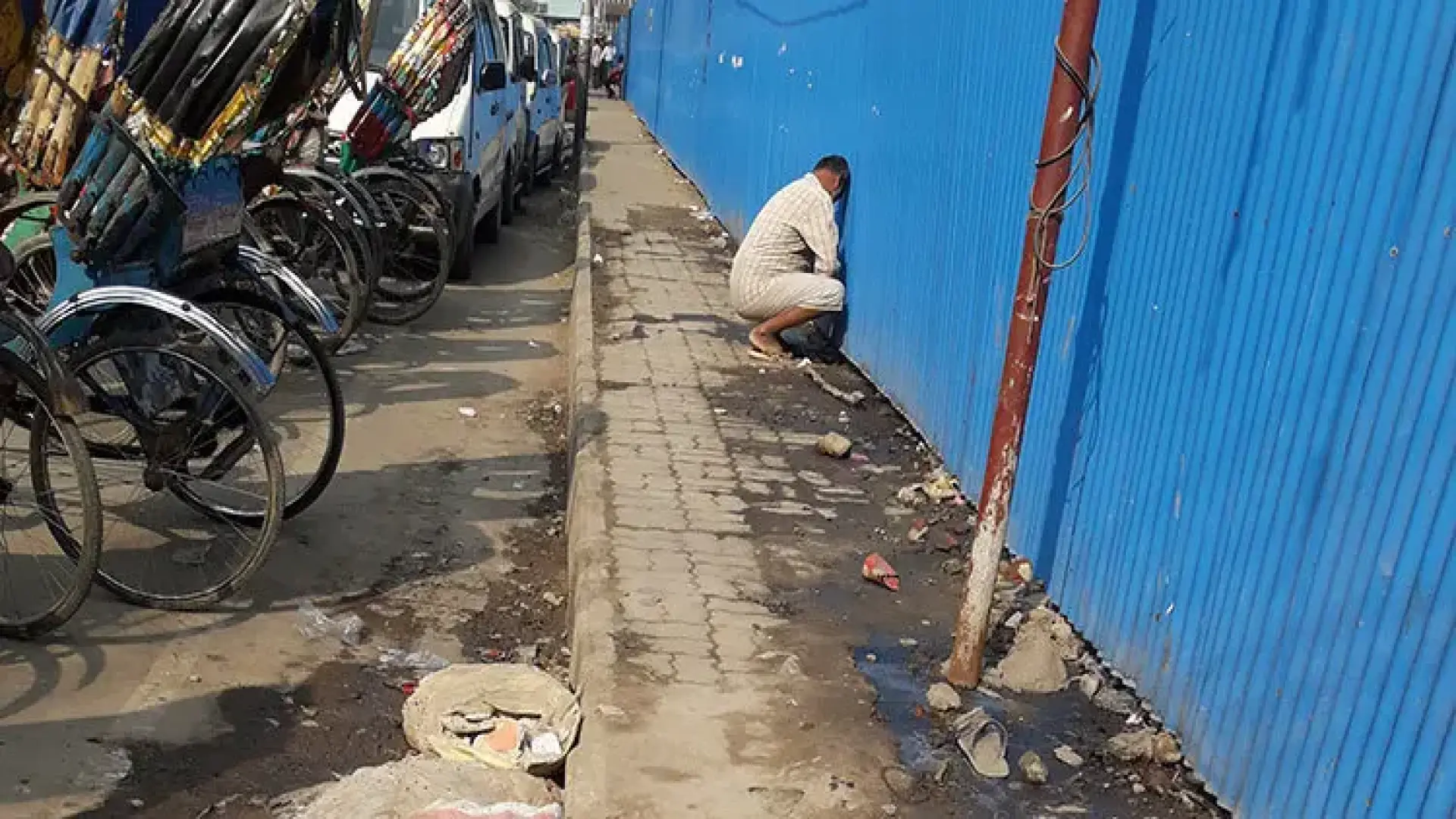
Dhaka has an estimated two million rickshaws operating every day, but the capital has only 198 public toilets. The shortage of sanitation facilities is forcing many rickshaw pullers to urinate in open spaces, beside roads and behind trees, raising concerns over public health and urban cleanliness.
More than 15 million people travel to Dhaka every day for work and other purposes. According to city corporation data, the two city corporations have 198 public toilets in total. On average, one public toilet serves more than 75,000 people.
Conversations with rickshaw pullers reveal several reasons behind the practice of urinating in public places. Some said they cannot find a public toilet when needed, while others avoid using paid facilities to save money.
During a field visit, rickshaw pullers were seen using toilets at mosques, madrasas, markets and hospitals. Some also use facilities at familiar restaurants during tea breaks. However, many resort to roadside areas, secluded walls, spaces beneath flyovers and behind trees.
Rickshaw numbers and toilet facilities
According to the two city corporations, Dhaka has approximately 213,000 registered pedal-powered rickshaws. Of these, 182,000 are registered under Dhaka South City Corporation and between 30,000 and 31,000 under Dhaka North City Corporation. Almost all other rickshaws operating in the city are unregistered.
A 2019 study by the Bangladesh Institute of Labour Studies estimated that Dhaka had around 1.1 million rickshaws. There is currently no reliable official estimate of the number of e-rickshaws operating in the capital. Overall, it is estimated that at least two million rickshaws operate in Dhaka every day.
Of the 198 public toilets, 120 are under Dhaka South City Corporation and 78 under Dhaka North City Corporation. Users are charged Tk 5 to Tk 10, but many facilities are in poor condition and lack basic amenities such as soap and tissue paper. Some toilets operated by private organisations, however, are maintained in better condition.
Rickshaw pullers cite lack of facilities and cost
Rickshaw puller Abdus Sabur was seen urinating beside the boundary wall of a government residential area on Eskaton Garden Road. When asked why he was using the roadside, he questioned where he could find a nearby toilet when an urgent need arose.
Another rickshaw puller, Sujon Mia, said public toilets in Dhaka charge Tk 5 to Tk 10. To save money, he often relieves himself near drains or behind trees. He argued that the government should provide free public toilets.
Rickshaw puller Mohammad Babul Mia, 45, said leaving his vehicle unattended to use a public toilet creates the risk of losing it. He also considered paying Tk 10 every time too expensive and said he would rather spend the money on food.
Dhaka needs at least 1,500 public toilets
A recent study by the Institute for Planning and Development (IPD) found that, under international standards, a public toilet with 10 units should be available for every 10,000 pedestrians travelling daily.
With around 15 million daily commuters, Dhaka needs at least 1,500 public toilet facilities. However, the city currently has only 198 permanent facilities—roughly one-tenth of the estimated requirement.
IPD Executive Director and urban planner Adil Muhammad Khan said government commitment was essential to keeping the capital clean. He questioned why public toilets were not being treated as an equally essential service alongside projects such as the metro rail.
He said the government or city corporations could provide free toilet facilities using public revenue. Making such an essential civic service free should be a priority, he added.
Women face discomfort over public urination
Women commuters often feel uncomfortable when men urinate beside roads and footpaths. Apart from the unpleasant sights, the resulting smell also creates difficulties for pedestrians.
Jagannath University student Tahmina Akter said she frequently sees people urinating and defecating in public places while travelling through Dhaka. She said such incidents are particularly noticeable among day labourers and rickshaw pullers.
She noted that low-cost public toilets are available in several parts of the city, while some mosques also provide toilet facilities. Despite these options, many people continue to use open spaces, including areas around educational institutions.
Public health concerns
Public health specialist Dr Lenin Chowdhury warned that open defecation and inadequate waste management are seriously damaging Dhaka’s urban environment.
He said decomposing waste produces ammonia, creating a strong smell and making footpaths difficult to use. Such unsanitary conditions can contribute to the spread of diseases, including diarrhoea and typhoid.
The report also highlighted risks associated with contaminated water, including cholera and hepatitis, as well as food contamination by flies and rodents.
Experts call for subsidised toilets
Urban planner Sheikh Muhammad Mehedi Ahsan said free or subsidised public toilets were urgently needed for homeless people and day labourers.
He suggested establishing dedicated public toilets in busy areas such as Kamalapur, Gulistan, Karwan Bazar, Sadarghat and Sayedabad. These facilities could be free or charge a symbolic fee of Tk 1 to Tk 2.
He also proposed creating parking-cum-sanitation zones specifically for rickshaw pullers.