Home
Collected Photo
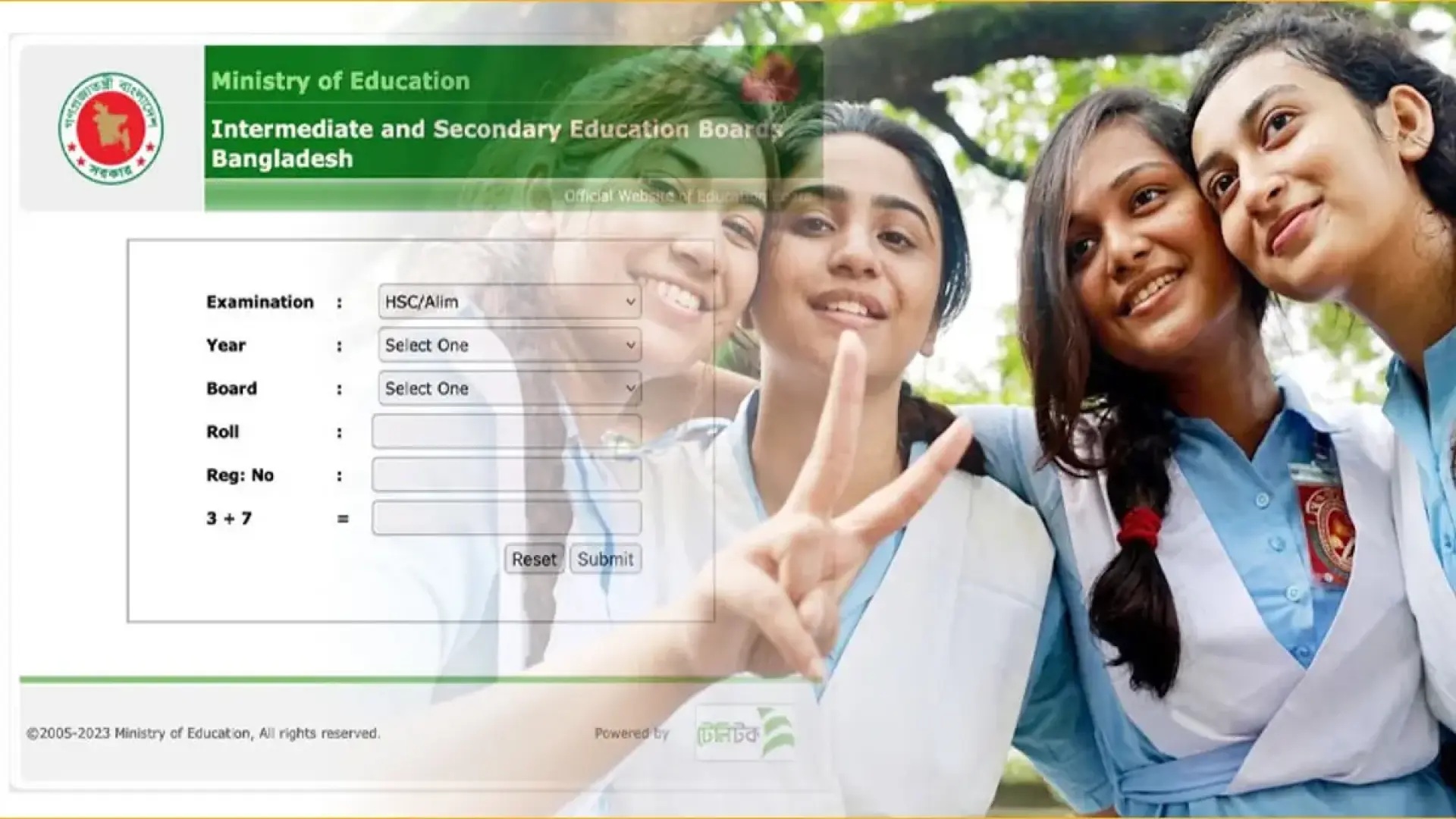
A total of 5,548 students who failed the 2026 Higher Secondary Certificate (HSC) examinations have passed following the reassessment of their answer scripts. Another 1,620 students have received GPA-5, while the results of 23,145 candidates have changed.
The revised results were published on Monday, November 23, less than a month after the original results were announced on October 30.
The large number of changes has raised questions about the accuracy of answer script evaluation and whether examiners and chief examiners failed to perform their responsibilities properly.
According to education board statistics, 291,211 students applied for reassessment of 1,087,416 answer scripts across different subjects. Results changed for 23,145 students, representing 7.95 per cent of applicants.
This year, for the first time, the authorities introduced a re-evaluation system alongside the traditional scrutiny process. As a result, the review was not limited to checking marks totals, omitted marks or errors in transferring scores.
Parents have raised concerns over the impact of the initial results on students. Dhaka Board guardian Abu Taher said an examiner's mistake could leave a student's academic future uncertain and called for accountability. Another guardian, Shimu Akhtar, said the scale of the changes was worrying and urged teachers involved in marking to be more responsible.
Differences across education boards
Among the nine general education boards, 261,889 applicants submitted 1,019,780 answer scripts for reassessment. Results changed for 19,710 students, or 7.53 per cent. Of them, 3,182 moved from failing to passing, while 1,411 received GPA-5.
The Mymensingh Board recorded the highest rate of changes among the general boards, at 14.14 per cent. Of its 18,870 applicants, 2,668 students saw their results change. A total of 654 students passed after previously failing, while 274 received GPA-5.
The Cumilla Board recorded the second-highest rate of changes, at 11.17 per cent. Among 25,193 applicants, 2,813 students received revised results. Of these, 507 moved from failing to passing and 120 received GPA-5.
The Dhaka Board had the highest number of applicants, with 81,794 students seeking reassessment of 335,881 answer scripts. Results changed for 5,853 students. Among them, 592 passed after failing, and 465 received GPA-5.
In the Chattogram Board, 27,124 applicants submitted 117,700 answer scripts for reassessment. Results changed for 2,043 students, representing 7.53 per cent of applicants. A total of 258 students moved from failing to passing, while 101 received GPA-5.
The Jashore Board recorded 1,736 changes among 26,277 applicants, a rate of 6.61 per cent. Some 357 students passed after previously failing, and 163 received GPA-5.
In Dinajpur, 2,035 students saw their results change, including 478 who moved from failing to passing. The change rate was 8.30 per cent.
In Sylhet, results changed for 1,267 students, or 8.77 per cent of applicants. Of them, 211 passed after failing and 77 received GPA-5.
The Barishal Board recorded a 4.23 per cent change rate, with 520 students receiving revised results. Of these, 21 moved from failing to passing and 21 received GPA-5.
Rajshahi had the lowest change rate among the general boards, at 2.47 per cent. Results changed for 775 students, including 104 who passed after previously failing and 56 who received GPA-5.
Technical Board records a high number of changes
The Bangladesh Technical Education Board recorded a 13.23 per cent change rate. Among 17,440 applicants, results changed for 2,307 students. Of these, 2,224 moved from failing to passing, accounting for nearly 40 per cent of all students who passed after reassessment across the boards. Another 38 students received GPA-5.
Technical Education Board Chairman Engineer Md Ruhul Amin said most of the changes resulted from mechanical errors during the scanning of answer scripts. He explained that even minor deviations during scanning could prevent the system from correctly identifying marks.
He said the board would take initiatives to make teachers more careful and aware to reduce errors in the evaluation process.
Board officials say changes are not unusual
Inter-Education Board Coordination Committee President and Dhaka Education Board Chairman Professor Syed Akhtaruzzaman said he did not consider the large number of changes unusual.
He explained that two examiners might award slightly different marks for the same answer script. Such differences become visible during reassessment and can lead to changes in results. He also noted that result changes had occurred in previous years.
However, he said the education boards would investigate whether any examiners had awarded marks in an unusual manner. If evidence of irregular evaluation or negligence was found, action would be taken under the relevant rules.
Experts call for better training and supervision
Professor I.K. Selim Ullah Khondkar, former principal of Dhaka College, said inadequate teacher training and limitations in the evaluation process might have contributed to errors.
He said teachers needed proper training in creative teaching methods, question patterns and evaluation standards. According to him, insufficient training over the past 10 to 15 years may have affected both classroom preparation and answer script assessment.
He also pointed to the pressure of evaluating a large number of scripts within a limited period as a possible source of mistakes.
He recommended selecting examiners based on qualifications and experience, improving teacher training and strengthening supervision by chief examiners.
However, he stressed that the entire evaluation system should be considered rather than placing all responsibility on individual examiners. He also described the opportunity for reassessment as positive because it allows students to challenge results and encourages greater care in marking.