484 Attacks on Police in 10 Months, at Least Five Officers Killed

Collected Photo
Attacks on police personnel and installations across Bangladesh have raised fresh concerns about public safety and the law enforcement situation. Police officers are being killed while carrying out investigations, arrested suspects are being snatched from custody, patrol teams are facing attacks, and police stations are being vandalised, looted and set on fire.
According to statistics from the Police Headquarters and information from the Bangladesh Police Association, 484 attacks on police were recorded across the country between January and October 2026. Four police personnel were killed and 370 seriously injured in these incidents. Including the killing of a police constable in Narayanganj on November 22, the death toll has risen to at least five this year.
In the first 23 days of November, at least 21 police personnel were injured in several attacks.
The statistics show that April recorded the highest number of attacks, with 66 incidents. There were 63 attacks in March and 55 in May. Although the number declined somewhat from June, it did not fall below 40 in any month. Attacks increased again in October and November.
Police officers killed in attacks
The latest fatal incident occurred on Sunday, November 22, in Fatullah, Narayanganj. Constable Anwar Molla was killed when miscreants attacked him while he was collecting information in plain clothes. Assistant Sub-Inspector Abdus Sattar, who was with him, survived. He was later attached to the police lines.
Earlier, Police Inspector Md Shah Alam was killed in an attack by miscreants while returning from an operation in Rupsha, Khulna, on October 8. In the first week of September, Special Branch Sub-Inspector Altaf Hossain was beaten to death in Aminbazar, Savar, Dhaka, after intervening in an assault on another person.
At least 11 attacks targeting police and Rapid Action Battalion (RAB) members have reportedly taken place in Narayanganj since March. Law enforcement personnel have faced attacks during operations and while taking action against drug trafficking.
On November 5, Armed Police Battalion member Abul Kalam was allegedly tortured by drug traders in Rupganj, Narayanganj, for opposing drug-related activities. On November 10, three members of the district Detective Branch of Police were attacked during an anti-drug operation at Kushtia Government College.
Police stations become targets
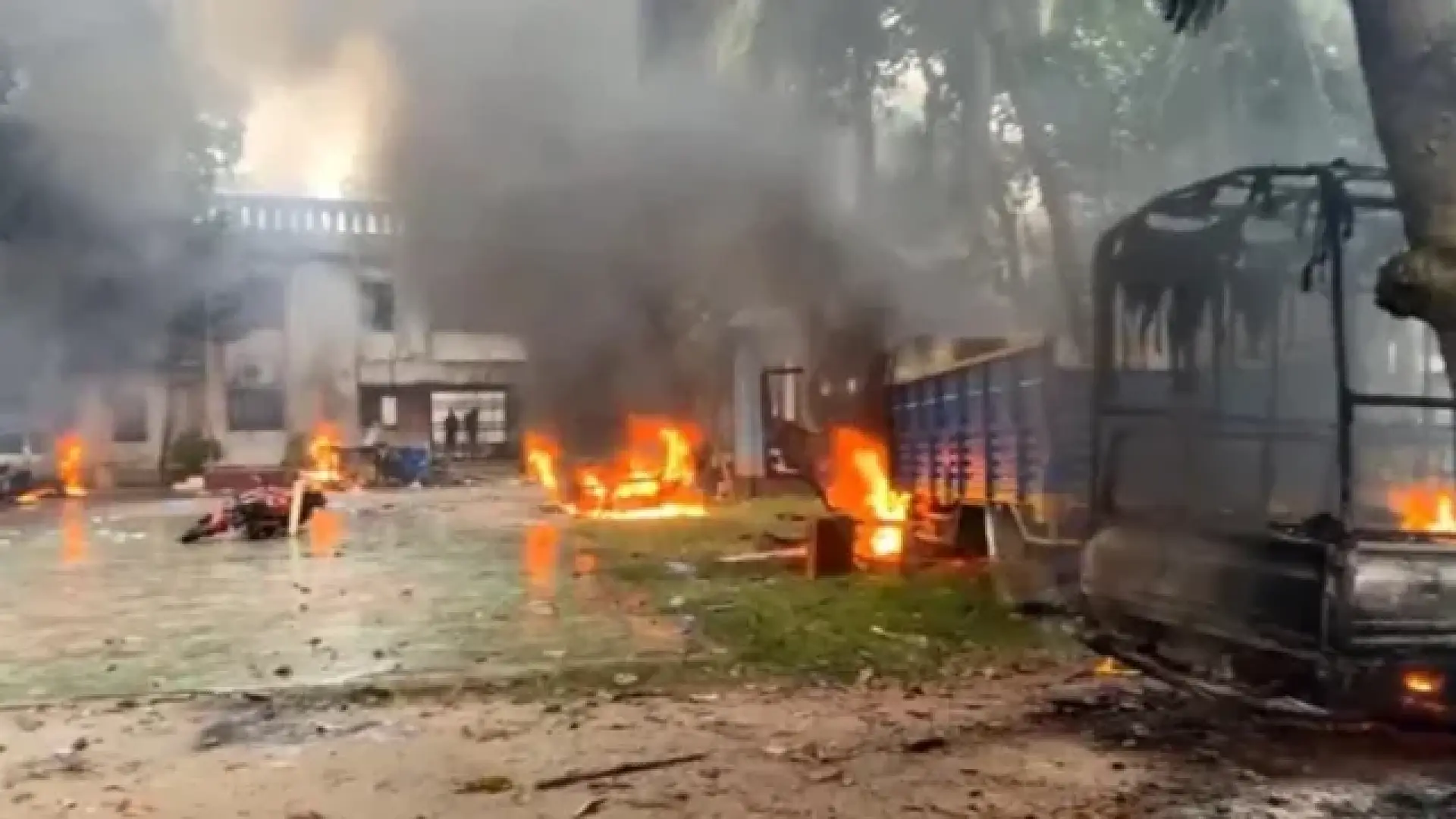
Police stations have also come under direct attack. Within a few days, two police stations in Gopalganj were attacked, vandalised and set on fire.
On November 17, attackers set fire to Tungipara Police Station and looted weapons. According to the Bangladesh Police Association, the station's infrastructure and several vehicles were damaged. Government-owned firearms and weapons deposited by members of the public were also looted.
Two days later, on November 19, Muksudpur Police Station was attacked and set on fire. Important documents, police vehicles and seized vehicles were damaged.
Leaders and activists of the banned Awami League and banned Chhatra League have been accused of carrying out the attacks. The incidents disrupted regular operations at both police stations, causing difficulties for local residents seeking police services.
On November 18, a police box in Muradpur, Chattogram, was also set on fire.
The consequences of setting a police station ablaze go beyond damage to buildings, furniture and vehicles. The destruction of case documents, criminal investigation records and evidence may affect investigations and judicial proceedings over the long term. It can also restrict local residents' access to security and legal services.
Arrested suspects snatched from police custody
Another major concern for police is the increasing number of incidents in which arrested suspects are snatched from custody through organised attacks.
On November 22, an attack on a police station and a clash with police took place in Akhaura, Brahmanbaria, following the arrest of Chhayeb Ali, an accused in an explosives case and joint convener of the upazila unit of the National Citizen Party (NCP). At least seven police personnel were injured.
Earlier, on November 6, an accused in a fraud case was snatched from police custody in Sonatala, Bogura, and a police vehicle was vandalised. Similar incidents occurred in Shantiganj, Sunamganj, in September and Kutubdia, Cox's Bazar, in July.
These incidents are creating new challenges for law enforcement agencies. Police now have to consider additional security risks while executing arrest warrants and conducting routine operations.
Different reasons behind attacks
According to people concerned, the attacks on police do not all have the same motive. In some cases, organised resistance by criminals is involved. In others, attempts to exert political influence or mob actions to take the law into one's own hands are believed to be factors.
Another concern is the lack of clear information about the progress of cases filed over attacks on police. Although arrests and case filings have been reported, details of how many investigations have been completed and how many charge sheets have been submitted remain unavailable.
The effects of the deadly use of force by police during the 2024 mass uprising, followed by subsequent violence against the force, are also still being felt. Police personnel are facing repeated attacks while the force is attempting to overcome the challenges to its professionalism, morale and public trust.
Criminal analyst Dr Touhidul Haque, an associate professor at the Institute of Social Welfare and Research at Dhaka University, told that repeated attacks on police were a matter of concern for law and order.
He said the issue was not limited to the safety of police personnel but was also connected to the state's ability and authority to enforce the law. Organised attacks on police and the snatching of suspects create a sense of insecurity among ordinary people.
He identified a culture of impunity, political influence, a lack of public trust in police and the increasingly reckless behaviour of criminals as possible factors behind the incidents.
He called for swift investigations and visible justice regardless of the political identity of those involved. He also stressed the need to rebuild police professionalism, accountability and public trust.
Police Headquarters' response
Officials at Police Headquarters said police personnel often face attacks while trying to control unruly situations. They said some groups were still attempting to create unrest, but police were continuing their duties and taking legal action against those involved in violence.
Kamarum Munira, Assistant Inspector General (Media and Public Relations) at Police Headquarters, told that investigations were underway to determine whether there was any deliberate plan behind the attacks.
She said attacks intended to weaken the morale of law enforcement agencies or obstruct police from performing their duties would not be tolerated.
She added that instructions had been issued to strengthen the security of police personnel in the field, maintain vigilance in vulnerable areas, increase intelligence surveillance and identify those responsible for the attacks. The authorities were also giving importance to necessary security equipment and training.
“Police work to protect the lives and property of the people. Therefore, an attack on police is an attack on the state's responsibility to maintain law and order,” she said, adding that strict legal action would be taken to prevent such crimes.