Why the Promise of Judicial Independence Repeatedly Succumbs to Executive Authority

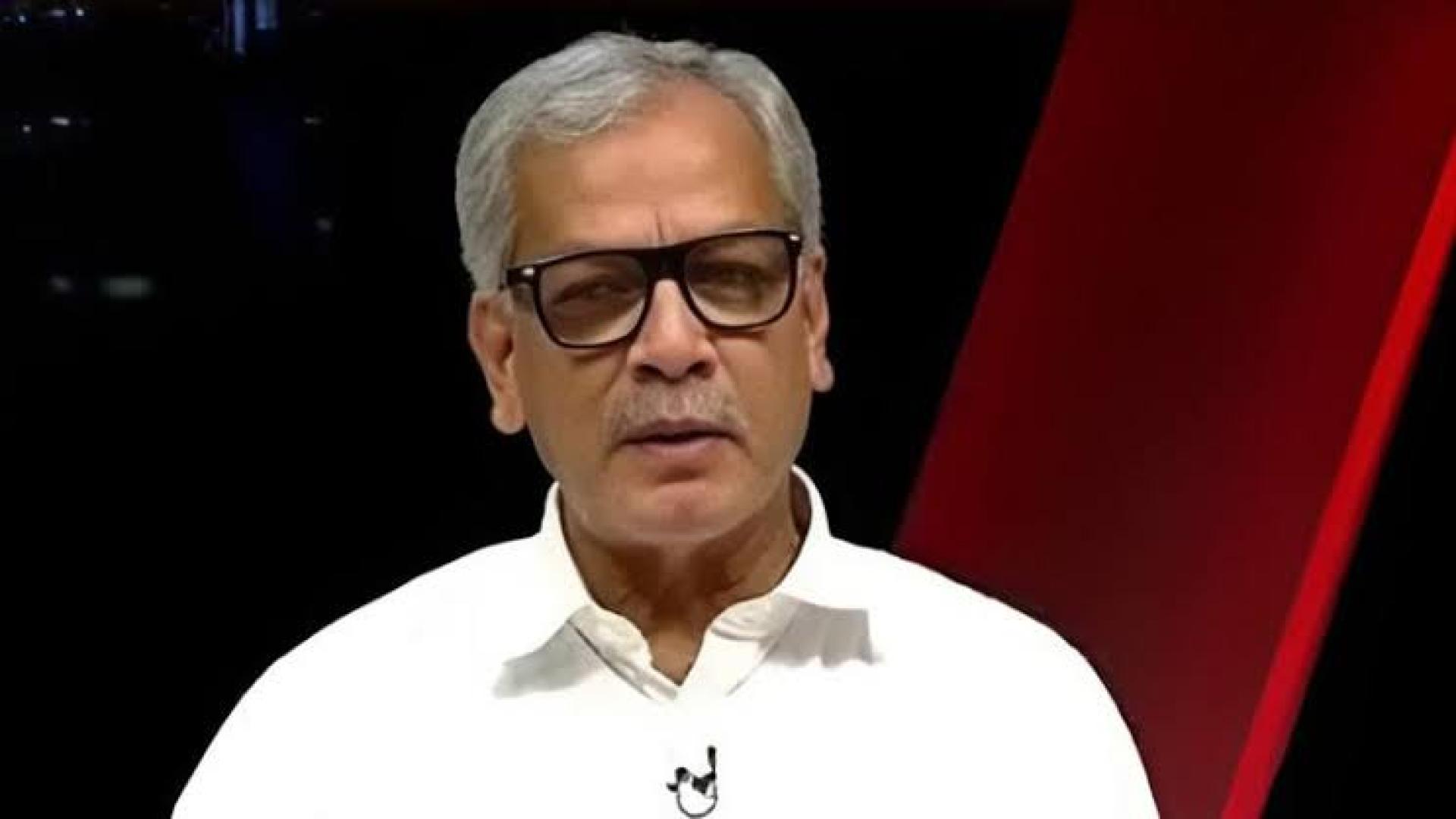
Advocate Abu Hena Razzaki
November 1 is observed in Bangladesh as Judicial Separation Day. Undoubtedly, the day marks an important milestone in the history of the judiciary. However, in light of historical realities, an important question needs to be raised: Was the judiciary truly separated on November 1, 2007, or was it primarily the judicial magistracy that was separated from the executive branch?
The reality is that the separation of the judicial and executive magistracies took effect on that day. Full administrative and institutional independence of the judiciary, however, was not established. Therefore, from a historical and constitutional perspective, calling the day “Judicial Magistracy Separation Day” rather than the full-fledged Judicial Separation Day would be more accurate.
After years of prolonged movements, legal battles and expectations among judicial officers, this important step was implemented under the military-backed caretaker government. Yet, since independence, successive elected governments have repeatedly pledged to ensure judicial independence but have failed to demonstrate the expected sincerity in fulfilling those commitments after coming to power. This is where a deep contradiction in our democratic politics lies.
Under Article 116 of the original Constitution of 1972, the Supreme Court was entrusted with the authority over the transfer, promotion, leave and disciplinary matters of subordinate court judges. The underlying principle was clear: a judge’s professional future should not depend on the wishes or whims of the executive branch.
However, the Fourth Amendment to the Constitution in 1975 transferred that authority to the President. Although provisions for consultation with the Supreme Court were subsequently introduced, the original constitutional vision of institutional independence was never fully restored.
The question is: Why is an independent judiciary considered an essential condition of democracy when political parties are in opposition, but the same institution is deemed necessary to keep under executive control once they assume power? Is judicial independence merely a matter of political rhetoric, or is it a constitutional right of citizens?
Following the landmark judgment in the Masdar Hossain case, the magistracy was withdrawn from the executive administration and placed under the judiciary on November 1, 2007. An independent judicial service and recruitment system were established. This was an important advancement.
However, the continued existence of dual authority over judges’ transfers, promotions, discipline and administrative management left the goal of full independence unfulfilled. In other words, although judicial functions were separated, the question of the judiciary’s administrative independence remained unresolved.
For nearly seventeen years after 2007, elected governments had the opportunity to complete this unfinished reform. In reality, however, allegations and concerns that administrative control over the judiciary was being used as a tool to exert political influence remained unresolved.
The lack of transparency, fairness and institutional accountability in determining judges’ professional futures has called into question the very purpose of judicial independence.
Following the July mass uprising, the issue of judicial independence gained renewed importance. Public aspirations emerged for a new state structure and institutional reorganisation.
During the interim government, initiatives to establish a separate Supreme Court Secretariat and ensure administrative autonomy created the possibility of fulfilling the judiciary’s long-standing expectations. The roles of the Chief Justice, the Law Adviser and the relevant institutions were important in this regard.
Efforts to build political consensus on judicial independence also generated new hope. Relevant stakeholders welcomed these initiatives.
However, recent developments have once again placed that hope in uncertainty. As the process of establishing the Supreme Court Secretariat began, the High Court Division delivered an important judgment concerning Article 116 of the Constitution.
The judgment directed the establishment of an independent secretariat and adopted a clear position on the constitutional question of administrative control over the judiciary.
Instead of proceeding with the implementation of the judgment, however, the government filed an appeal. Subsequently, the Appellate Division stayed the operation of the High Court Division’s judgment.
As a result, the long-awaited progress towards institutional independence of the judiciary has once again become uncertain.
Alongside the government’s position, the role of the highest court also deserves an impartial assessment. Judicial independence is related to the basic structure of the Constitution.
It is therefore necessary to ask whether the highest court has been able to demonstrate judicial activism to the expected extent on such a fundamental issue.
While fully respecting the legal processes of appeals and stay orders in matters under judicial consideration, it can still be said that judicial leadership has a crucial responsibility to protect the constitutional status and institutional independence of the judiciary.
The effectiveness of fulfilling this responsibility will remain a subject of impartial historical judgment.
Judicial activism, however, does not mean exceeding legal boundaries. Rather, it means ensuring effective protection of fundamental rights and institutional independence through the proper exercise of constitutional authority.
Just as the executive branch cannot evade its responsibility to ensure judicial independence, the judiciary’s own constitutional responsibilities cannot remain beyond accountability.
One point must be particularly remembered: judicial independence is not a matter of personal privileges for judges or a special demand of any professional group. It is a fundamental right of people seeking justice.
When an ordinary citizen approaches a court against a powerful individual or institution of the state, an independent and impartial judiciary is their final refuge.
If authority over judges’ transfers, promotions or disciplinary matters rests with an authority whose decisions may themselves be subject to judicial scrutiny, the risk of institutional conflicts of interest inevitably remains.
To ensure judicial independence, the constitutional question surrounding Article 116 must be permanently resolved in accordance with the vision of the original Constitution.
An effective and independent judicial secretariat, a transparent system of transfers and promotions, and adequate administrative and financial capacity must also be ensured.
At the same time, internal accountability, efficiency, discipline and responsibility towards justice seekers must be established within the judiciary.
Independence can never be a substitute for accountability. Rather, transparent and effective accountability is an essential condition of genuine independence.
An uncomfortable historical truth is that several significant advances towards judicial independence have taken place under unelected or interim governments.
Yet, even during the prolonged tenures of elected governments, the question of full institutional independence has remained unresolved.
This does not mean that unelected governments are superior. Rather, it highlights the need for deep self-reflection on the lack of political will and constitutional accountability among democratic governments.
The success of democracy lies not merely in winning elections but also in protecting the independence of state institutions, maintaining the balance of power and safeguarding citizens’ rights.
A government that ensures judicial independence does not weaken its own authority. Instead, it strengthens the state and consolidates the foundations of democracy.
More than half a century after independence, it is not reassuring for the nation to hear the same promises about judicial independence repeatedly.
What is needed is not the repetition of promises but clear political decisions, effective legal measures and specific implementation deadlines.
November 1, therefore, is not merely a day to celebrate a past achievement. It is a day to confront an unfinished constitutional commitment.
There is no room for complacency by presenting the separation of the judicial magistracy as full judicial independence.
History will one day certainly judge who spoke about judicial independence, who took initiatives to implement it, and who obstructed its progress in pursuit of political interests.
The relationship between the state and its people is continuously shaped by the functioning of state institutions.
An independent judiciary is not merely an ornament of a sovereign state. It protects the people and makes the state more people-oriented and welfare-focused.
To enhance the regional and global image of Bangladesh, we must make certain fundamental decisions.
Let that journey begin by ensuring judicial independence. This is our expectation on November 1.
Senior Advocate, The Supreme Court.