Bangladesh Starts E-Rickshaw Registration: Fees, Rules and Speed Limits

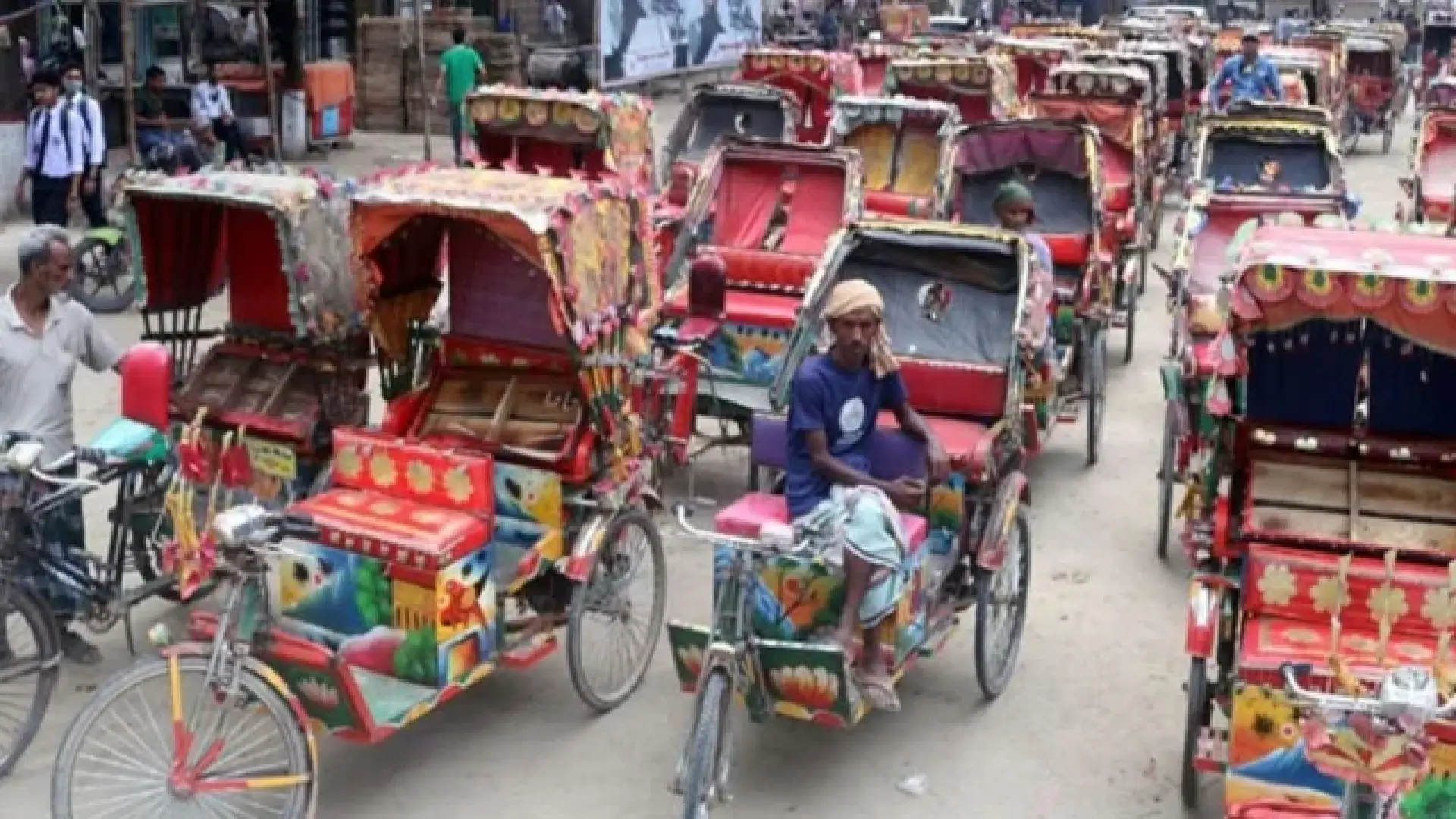
File Photo
Registration of battery-operated three-wheeled rickshaws has begun in 13 city corporations across Bangladesh as the government moves to bring the vehicles under a formal regulatory framework.
The registration process is part of the newly introduced Three-Wheeled Low-Speed Battery-Operated Rickshaw (E-Rickshaw) Movement Rules, 2026, aimed at improving road safety, reducing traffic congestion and ensuring discipline in urban transport.
State Minister for Local Government, Rural Development and Cooperatives Mir Shahe Alam announced the initiative at a press briefing at the Secretariat on Sunday.
He said the government would initially register the vehicles and gradually bring their drivers under a driving licence system.
Registration Fees and Renewal Charges
Under the new regulations, registration fees have been fixed according to passenger capacity.
A two-passenger e-rickshaw will require a one-time registration fee of Tk 8,000, while a four-passenger vehicle will require Tk 10,000.
The annual renewal fee has been set at Tk 4,000 for two-passenger vehicles and Tk 5,000 for four-passenger vehicles.
An additional fee of Tk 1,000 will be charged for a QR code-enabled fitness certificate.
Each e-rickshaw will have a unique registration number, number plate and registration document. A person holding a national identity card will be allowed to register a maximum of five e-rickshaws.
The economic lifespan of each registered vehicle will be 12 years.
Eight Zones Planned for Dhaka
The government plans to divide Dhaka into eight zones for e-rickshaw operations, with four zones under each of the two city corporations.
Vehicles operating in different zones will have distinct colours to prevent them from moving between designated areas.
The number of e-rickshaws allowed in each zone will be determined through discussions between the traffic police and the city corporations.
However, the government has not yet imposed an overall limit on the number of e-rickshaws.
Speed Limits and Restricted Routes
The new regulations set the maximum speed of e-rickshaws at 25 kilometres per hour.
In areas near schools, hospitals, religious institutions and crowded places, the speed limit will be reduced to 15 kilometres per hour.
E-rickshaws will not be allowed to operate on national highways, expressways, elevated expressways and major bus routes, including Bus Rapid Transit corridors.
The vehicles must follow designated routes and remain on the left side of the road.
Overloading passengers, reckless driving, unauthorised modifications, using unapproved batteries and violating traffic signals will be considered punishable offences.
BUET-Approved Designs Made Mandatory
The government has formed a seven-member committee to oversee e-rickshaw production and recommend approval for manufacturers.
The committee includes representatives from the Local Government Division, Bangladesh University of Engineering and Technology (BUET), city corporations, traffic police and district administration.
According to the regulations, e-rickshaws must be manufactured in accordance with designs approved by BUET.
Existing vehicles will also have to undergo necessary modifications to meet the approved technical and safety standards before registration.
Driving Licences to Be Introduced Gradually
Although the new regulations include provisions for driving licences, the government will not introduce the system immediately.
The state minister said processing applications from a large number of drivers at the same time would create difficulties for city corporations.
The government will therefore prioritise vehicle registration before gradually introducing driving licences through a separate notification.
No Immediate Eviction of Existing E-Rickshaws
The government has urged existing e-rickshaw owners and drivers not to panic, assuring them that there is no immediate plan to stop their operations.
The vehicles will continue to operate for the time being while registration proceeds in phases.
The authorities will gradually remove illegal e-rickshaws after bringing the vehicles under the new regulatory framework.
Charging Stations and Fare Structure
The regulations also provide for designated charging stations and licensed garages.
Charging e-rickshaws through unauthorised electricity connections will be subject to legal action.
The government plans to encourage solar-powered charging facilities and allow approved charging stations at designated locations.
The state minister said fares would be determined on a per-kilometre basis after consultations with vehicle owners, traffic authorities and city corporations.
The registration initiative marks a major step towards regulating battery-operated rickshaws, which have long operated in urban areas without a comprehensive legal framework.