Home
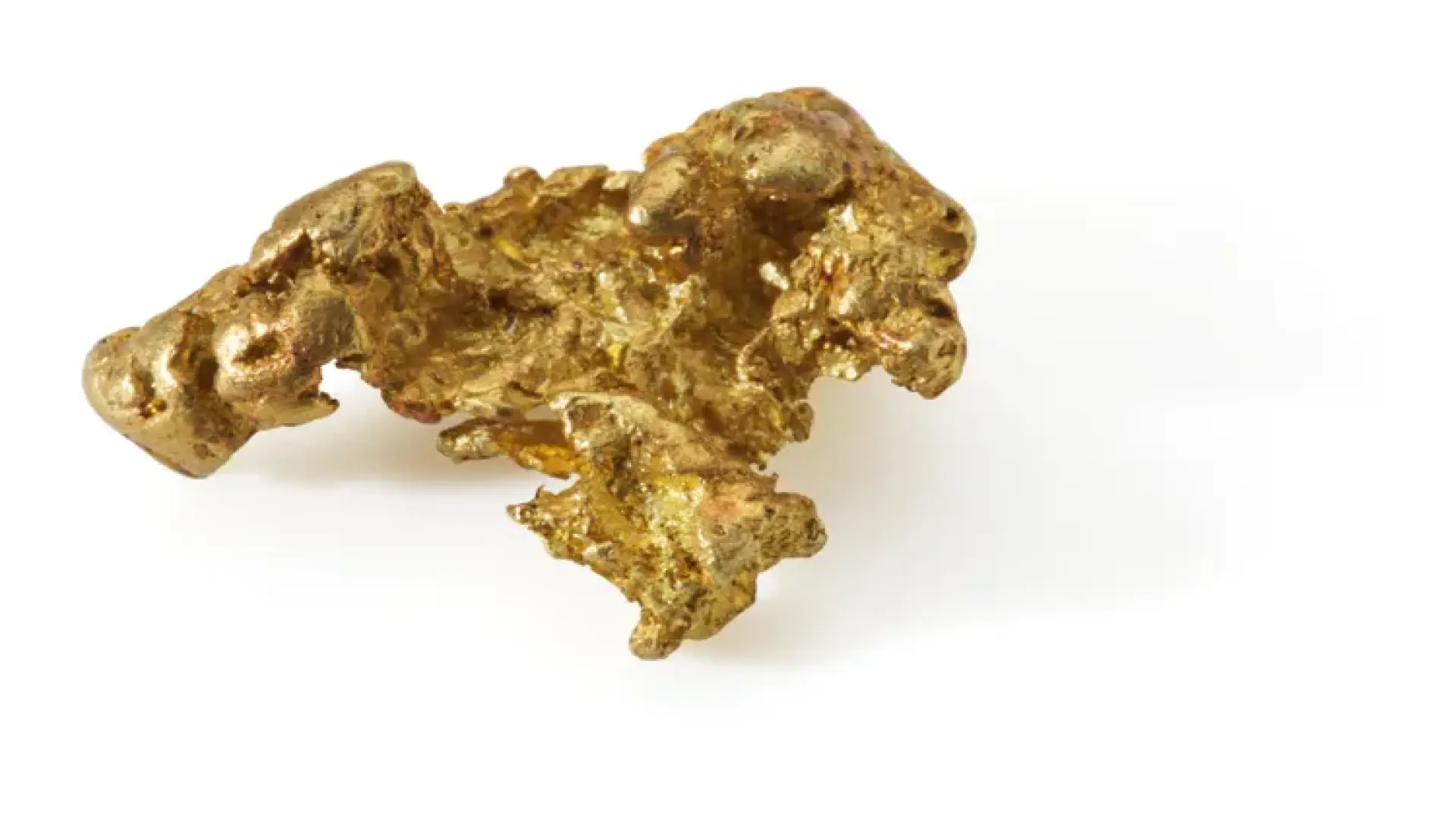
Gold is one of the most valuable and sought-after metals on Earth. Its rarity, beauty and resistance to corrosion have made it highly prized for thousands of years. But the origin of gold is far more extraordinary than many people realise. Scientists believe the gold found on Earth was created billions of years ago through powerful cosmic events, long before the formation of our planet.
According to a report published by ThoughtCo, gold is formed under extreme conditions during events such as supernova explosions and collisions between neutron stars. These events produce the enormous energy and neutron-rich environments needed to create heavy elements.
Gold was born before Earth
The Sun produces many elements through nuclear fusion, but it cannot generate gold. The creation of this precious metal requires much more extreme conditions.
When massive stars reach the end of their lives, they can explode as supernovae. Neutron stars, the extremely dense remnants of some exploded stars, can also collide with one another. During these events, heavy elements form through a process known as rapid neutron capture, or the r-process.
Scientists have found evidence that neutron-star collisions can produce gold, platinum and other heavy elements. These materials are released into space and eventually become part of clouds of gas and dust from which new stars and planets form.
How did gold reach Earth?
When Earth was forming, heavy elements such as iron and gold sank towards its core because of their high density.
However, scientists believe that asteroid impacts around four billion years ago helped redistribute some of these heavy elements towards the Earth's mantle and crust. This made some of the gold accessible near the surface.
Gold is found in different forms, including natural gold flakes, gold-bearing rocks and electrum, a natural alloy of gold and silver.
Over time, erosion releases gold particles from surrounding rocks. Because gold is particularly heavy, the particles can accumulate in riverbeds, alluvial deposits and other locations.
Earthquakes also contribute to the formation of gold deposits. Movements along geological faults can rapidly change the pressure of mineral-rich water. As the water loses pressure and conditions change, quartz and gold can be deposited in cracks and veins in rocks. Similar processes can occur in volcanic environments.
How much gold is there on Earth?
Gold makes up only a tiny fraction of the Earth's total mass. According to a 2016 estimate by the United States Geological Survey (USGS), approximately 244,000 US tons of gold had been discovered throughout human history at that time.
Gold is extremely dense, with a density of about 19.32 grams per cubic centimetre. If all the gold mined throughout history were melted together, it would form a cube roughly 70 feet on each side.
Although substantial quantities of gold may exist beneath the Earth's surface, extracting much of it is not economically practical.
Can gold be made artificially?
For centuries, alchemists tried to turn ordinary metals such as lead into gold. However, ordinary chemical reactions cannot transform one element into another.
An element is defined by the number of protons in its atomic nucleus. Every gold atom has 79 protons, making its atomic number 79.
Scientists can theoretically create gold through nuclear transmutation, which changes the atomic structure of one element into another. This can involve adding neutrons to an element and triggering radioactive decay.
Japanese physicist Hantaro Nagaoka produced gold by bombarding mercury with neutrons in 1924. Scientists later demonstrated similar nuclear transformations involving other elements, including lead.
However, producing gold through nuclear processes is extremely expensive and impractical for commercial purposes.
The story of gold therefore extends far beyond mines and jewellery shops. Every natural gold deposit carries a history connected to some of the most powerful events in the universe.