Home

Collected Photo
Political tensions are rising in Bangladesh ahead of December, following former prime minister Sheikh Hasina’s announcement that she plans to return to the country. Major political parties are now outlining their positions on how to respond to possible activities by the banned Awami League.
The developments come amid reports of cocktail explosions at important installations in Dhaka and other districts, as well as vehicles being set on fire. The government has blamed activists of the banned Awami League for these incidents, while the party’s leaders and activists have continued to hold sudden street processions and chant slogans.
Awami League activists’ activities reportedly intensified ahead of a previously announced nationwide lockdown scheduled for November 19. On Sunday, November 15, a large protest was held in Gopalganj, Sheikh Hasina’s home district. They were accused of vandalising the BNP district office and a July memorial, renaming Hadi Chattar as Bangabandhu Chattar and breaking the lock of a long-closed party office to chant anti-government slogans.
Following the incidents, the government withdrew the deputy commissioner and superintendent of police of Gopalganj. Police have also launched searches in neighbourhoods, arrested suspected Awami League activists and strengthened security at important locations.
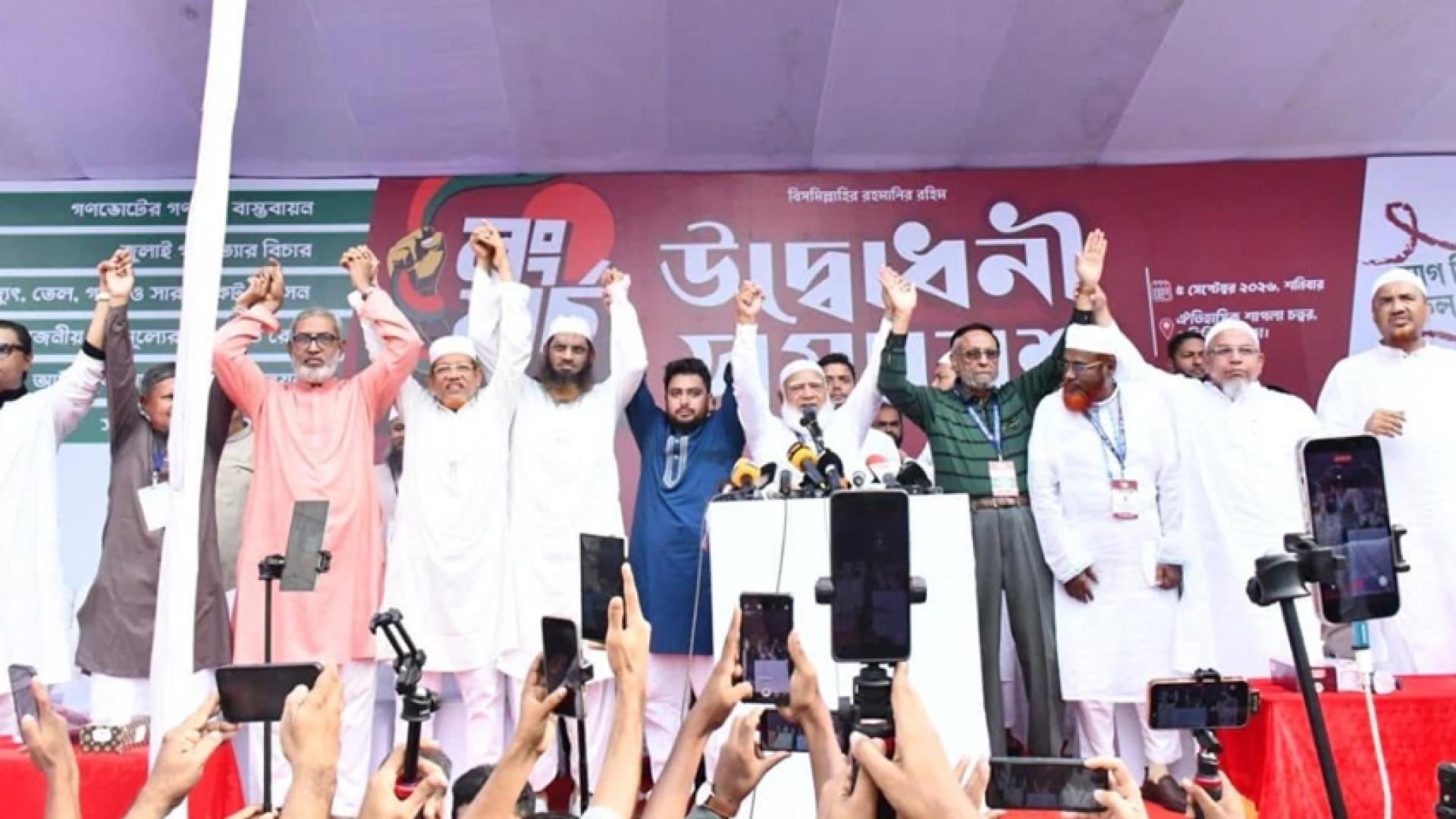
BNP leaders have announced plans for political resistance against activities they describe as attempts to create sabotage and disorder. BNP Acting Secretary-General Ruhul Kabir Rizvi said party activists would work alongside the administration to prevent such incidents. Opposition leader Dr Shafiqur Rahman has also called on activists to mobilise against fascism in December.
However, political analysts and party leaders differ over whether these developments could lead to a joint political position by the BNP and Jamaat-e-Islami.
Dr Badiul Alam Majumdar, secretary of Shushashoner Jonno Nagorik (Shujan), told that Sheikh Hasina’s return would depend on the extradition treaty process. He said he did not believe India would hand her over and saw no likelihood of her returning in December.
He added that the BNP and Jamaat could form an understanding if the banned Awami League tried to intensify political tensions, as both parties oppose Sheikh Hasina.
Nagorik Oikya President and political analyst Mahmudur Rahman Manna said Hasina would return only when she considered the situation safe. He said it was difficult to say whether the BNP and Jamaat would form a political alliance, although their past relationship could make cooperation possible depending on the circumstances.
Amar Bangladesh Party (AB Party) Chairman Mujibur Rahman Manju, a partner in the 11-party alliance, said the announcement of Hasina’s return was being used to carry out what he described as planned violence and provocative activities across the country. He said the political positions of the BNP, Jamaat and other forces associated with the July uprising could become more consolidated as December approached.
Manju added that political groups might unite as they did in August if the administration failed to control disorder. He also said such unity could create stronger pressure for legal action against Hasina if she returned.
BNP signals formal programmes
Rizvi said the BNP would soon announce formal political programmes to resist activities by the banned Awami League. Speaking at a party event in Dhaka on Sunday, he alleged that the party was attempting to create sabotage and disorder from inside and outside the country.
BNP Chairman and Prime Minister Tarique Rahman has also instructed party lawmakers to remain active on the ground to prevent sabotage.
BNP Vice-Chairman and former lawmaker Shamsuzzaman Dudu said party activists would respond politically, together with the public, if what he described as a fallen fascist force tried to destabilise the country. He also called for unity among anti-fascist political forces.
Opposition questions government’s position
Leaders of the opposition have expressed doubts about the government’s commitment to politically resist the banned Awami League. They alleged that the government was conspiring to bring the party back into politics and questioned whether its ministers and lawmakers would actually take to the streets.
Dr AHM Hamidur Rahman Azad, coordinator of the 11-party alliance and assistant secretary-general of Bangladesh Jamaat-e-Islami, dismissed the possibility of Hasina returning in December. He described the government’s statements about resistance as rhetoric intended to motivate party activists.
Azad also accused the government of failing to maintain law and order, alleging that it was unable to control even minor disturbances. He questioned the effectiveness of the Home Ministry and said the government’s assurances about taking to the streets would not convince the public.