Home
Home
Thousands of Bangladeshi migrant workers in Saudi Arabia are facing mounting financial hardship and growing security fears as delayed wages, shrinking job opportunities and regional conflict disrupt their livelihoods.
The crisis has also affected workers returning from holidays in Bangladesh, with flight suspensions leaving many stranded and worried about losing their jobs, according to a report by Bangla Tribune. The situation has exposed the vulnerability of migrants who depend heavily on employment in the Middle East to support their families back home.
Saudi Arabia is home to more than 3.2 million Bangladeshis, many of whom work in cleaning, construction and domestic services. The report says more than 80 percent are employed in low-skilled jobs, with monthly earnings often ranging between Tk 25,000 and Tk 30,000.
Reduced wages and disappearing jobs
For many workers, finding employment has become increasingly difficult, while others say employers have cut salaries or delayed payments for months.
Jamal Hossain, a Bangladeshi worker employed by a cleaning company in the Al-Kharj area near Riyadh, said his monthly salary had fallen from 1,400 Saudi riyals to 700 riyals after his employer cited a decline in work.
Hossain said he had borrowed Tk 350,000 to travel to Saudi Arabia and was struggling to repay the debt. He also complained about rising fees for the Takamol skills assessment.
Other workers face the prospect of losing their jobs altogether. Rafiqul, a worker from Shariatpur employed in Dammam, said his company had decided to send workers home after a dispute over salary increases. With his residency permit, or iqama, nearing expiry, he feared possible detention if he remained without valid documentation.
The report also describes the difficulties faced by newly arrived migrants. Sohel Rana from Chattogram, who travelled to Riyadh two months ago on what is commonly known as a “free visa,” said he had to seek daily work at a labour market rather than receive a regular company assignment. He said he found work on only nine days during the previous month.
Flight suspensions leave workers stranded
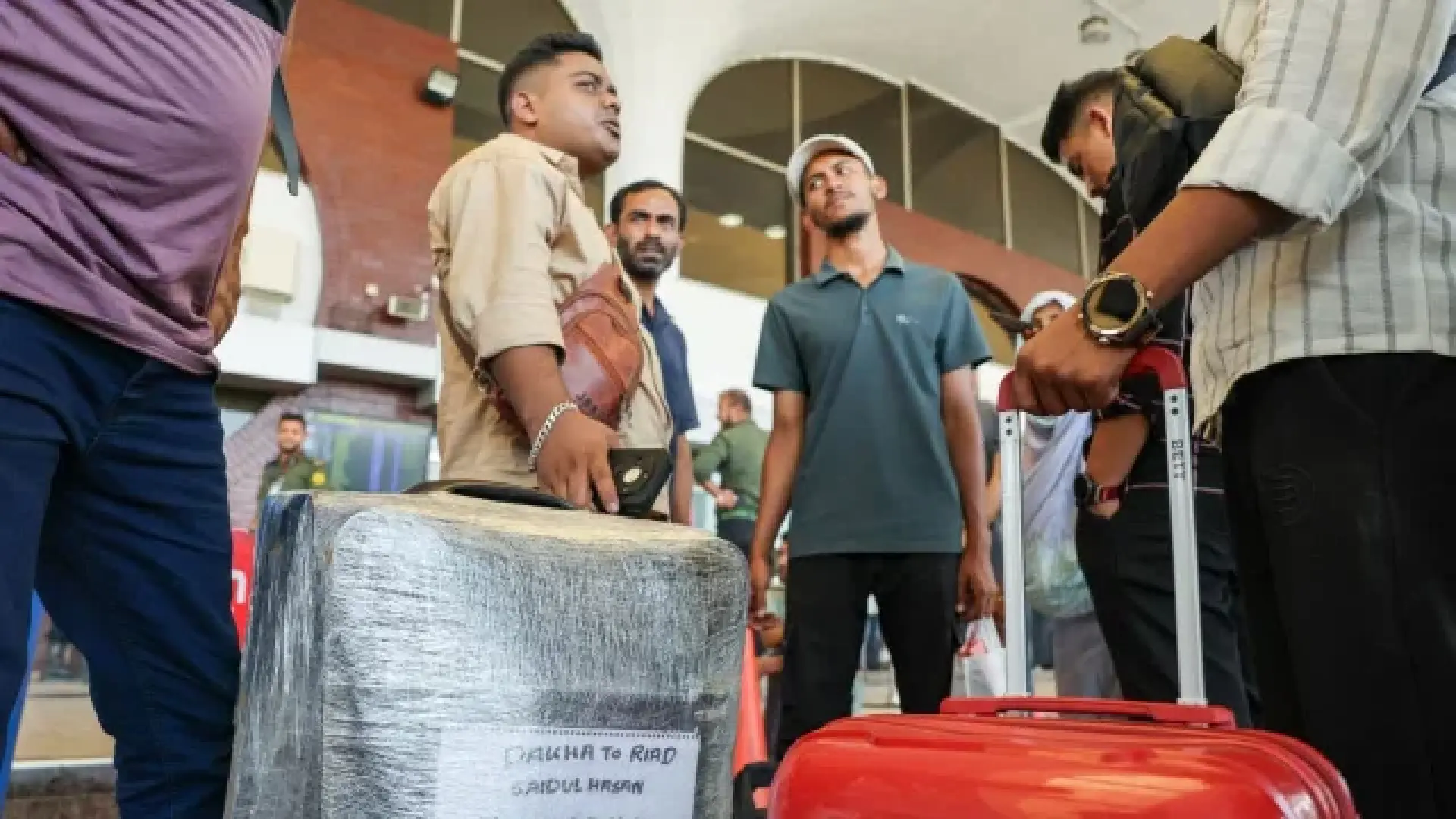
Disruptions to air travel have added another layer of uncertainty. According to Bangla Tribune, 39 flights from Dhaka to Riyadh had been suspended by October 12, affecting 5,418 passengers.
The cancellations involved flights operated by Biman Bangladesh Airlines, US-Bangla Airlines, Saudia and Riyadh Air. US-Bangla announced that services on the Dhaka-Riyadh-Dhaka route would remain suspended until October 21 because of the security situation.
For workers whose holidays are ending, missing a scheduled return flight could threaten their employment and residency status.
Jamal Uddin, a migrant worker stranded at Hazrat Shahjalal International Airport, told the newspaper that his leave was due to end on October 15. He feared his employer could mark him absent and cancel his iqama if he failed to return on time.
Civil Aviation and Tourism Minister M Rashiduzzaman Millat said the government was working to arrange alternative flights through Saudi airports where operations remained possible.
Deadly attack heightens security concerns
The economic difficulties have been compounded by fears over regional conflict. Bangla Tribune reported that a Houthi missile attack on Riyadh’s King Khalid International Airport on October 12 killed 12 people and injured 309.
Two Bangladeshis—Shahed Ahmed from Bogura and Nasrullah Badrpuri from Cumilla—were among those killed, according to the report. Another 24 Bangladeshis were injured, including 11 workers and 13 Umrah pilgrims.
The injured were receiving treatment at hospitals in Riyadh. Three were reported to be in intensive care, with their conditions described as stable.
The attack and subsequent flight disruptions have heightened anxiety among migrant workers and their families. Business owners have also reported a slowdown in customer activity amid security concerns.
Nurul Afsar, a Bangladeshi electronics trader in Jeddah, said he was still recovering from losses suffered during the Covid-19 pandemic and that customers were now reluctant to visit his shop, particularly in the evening.
Families at home face the financial fallout
The difficulties facing migrant workers have implications beyond Saudi Arabia. Families in Bangladesh often rely on remittances to cover household expenses, education, healthcare and loan repayments.
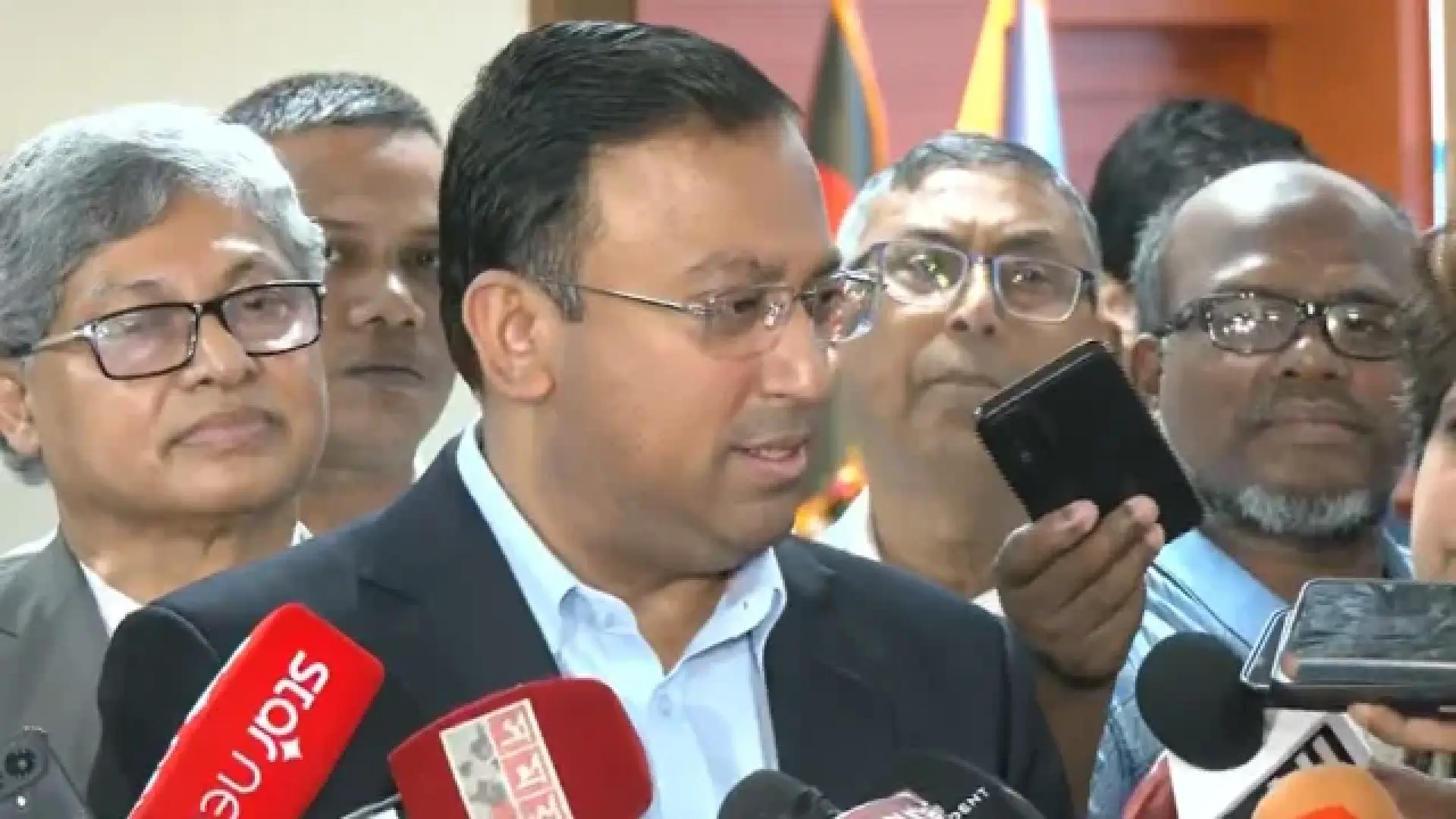
State Minister for Foreign Affairs Shama Obaed Islam warned that the conflict in the Middle East could affect Bangladeshi workers’ employment prospects and remittance flows. She said some migrants had already lost their jobs and returned home, while others remained in the region without work.
She added that Bangladesh was seeking new overseas labour markets and promoting skilled and legal migration to reduce dependence on traditional destinations.
Shariful Hasan, associate director of BRAC, told Bangla Tribune that experts had long warned against excessive reliance on the Middle East for overseas employment. He said the conflict could affect investment, tourism, restaurants and construction, potentially reducing job opportunities and wages for migrant workers even after hostilities end.
The report also cited a nearly 29 percent year-on-year decline in the number of workers receiving clearance to travel abroad in September, amid regional conflict and restrictions in several major labour markets.
As the crisis continues, Bangladesh’s challenge is not only to help stranded workers return safely or protect those already abroad, but also to strengthen overseas employment options and reduce the economic risks faced by families dependent on migrant earnings.